Health and Safety Policy for Oven Cleaner Operations
 Purpose: This health and safety policy sets out clear expectations for the safe use, storage and handling of oven cleaner products, covering domestic and commercial oven cleaning tasks. It outlines responsibilities, risk control measures and safe systems of work to reduce exposure to hazardous oven-cleaning chemicals and to protect operatives, bystanders and property. The policy applies to all staff, contractors and anyone involved in oven-cleaning operations, whether using aerosol oven-cleaner, paste formulations or concentrated degreasers.
Scope and responsibilities
Management must ensure that a risk-based approach is used for all oven-cleaner activities. Supervisors should verify that operatives receive training, proper equipment and supervision. Workers are expected to follow safe procedures, wear required personal protective equipment (PPE) and report incidents promptly. The policy covers both small-scale domestic oven cleans and larger commercial oven cleaner contracts and explains how to maintain safe systems for each job type.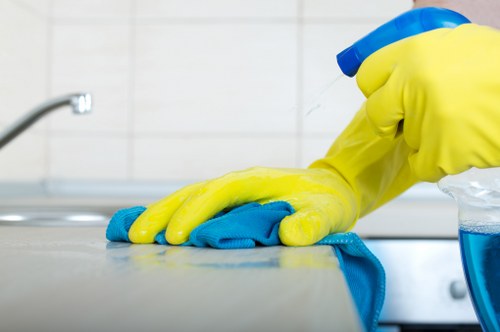
Risk assessment and control
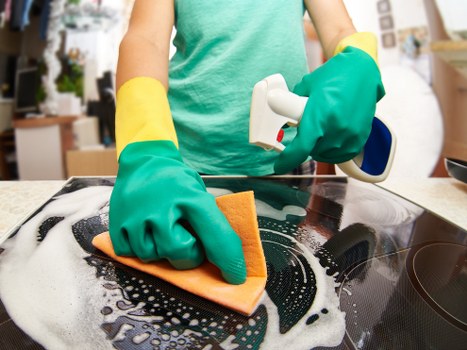
A documented risk assessment shall identify hazards such as chemical burns, inhalation of fumes, slips from spillages and eye injuries. Control measures include using less hazardous formulations where possible, ensuring adequate ventilation during oven-cleaning, isolating electrical supplies and removing heat sources before treatment. Oven cleaning plans must be tailored for each environment, taking account of confined spaces, presence of food contact surfaces and proximity to other workers. PPE and safe handling Appropriate PPE is mandatory and may include chemical-resistant gloves, eye protection, face shields, aprons and respiratory protection if ventilation is inadequate. Use of puncture-resistant and chemical-resistant gloves is crucial when handling concentrated oven-cleaner products. Workers must be trained in correct donning, doffing and decontamination of PPE to prevent cross-contamination and skin exposure.
Storage and labeling controls require that oven-cleaning chemicals are kept in secure, ventilated areas with secondary containment for liquids. All containers should be clearly labeled and kept in original packaging where possible. Segregate incompatible substances and maintain accessible Safety Data Sheets (SDS) for all formulations used in oven-cleaner operations. Transfer of concentrated cleaners should use appropriate pumps and funnels to minimize spills.
Spill response and emergency procedures Emergency plans must be in place for chemical spills, splashes and accidental exposure. Immediate first aid measures include flushing eyes or skin with water and seeking medical attention for significant exposure to oven-cleaner chemicals. Evacuation routes, spill kits, neutralizing agents and waste disposal protocols need to be readily available. All operatives must know the location of emergency wash stations and how to summon assistance without delay.
Training and competence
Employers shall provide task-specific training that covers safe use of oven-cleaner products, understanding labels and SDS, correct application techniques for different oven types and the safe disposal of residues. Training should emphasize that improper use of oven-cleaning chemicals increases the risk of burns, respiratory irritation and damage to equipment. Competence should be assessed periodically and refreshed when products, methods or equipment change.Working practices and monitoring Regular inspections and monitoring help ensure adherence to this policy. Routine checks should record the condition of PPE, ventilation effectiveness and any signs of chemical misuse. Use a checklist for pre-job and post-job safety verification. Where applicable, implement a permit-to-work for confined spaces or high-risk commercial oven-cleaner projects to ensure all controls are in place before work starts.

Review and continuous improvement
This policy is subject to periodic review to reflect new products, technologies and lessons learned from incidents. Management will consult with staff and safety representatives to improve procedures and reduce risks associated with oven-cleaner activities. The objective is to maintain a safe working environment and to promote a culture where safety is integral to every oven-cleaning task.- Key controls include: risk assessment, adequate ventilation, correct PPE and safe storage.
- Emergency readiness: spill kits, wash stations and clear reporting pathways.
- Continuous training: refreshers and competency checks for all personnel handling oven-cleaning chemicals.
Summary policy statement: All oven cleaner operations must be planned and executed to minimize harm. By following the requirements set out in this policy — including hazard assessment, PPE use, ventilation, emergency preparedness and ongoing training — organizations can significantly lower the risks associated with oven-cleaning tasks and ensure the health and safety of workers and others.